Eight Books About Fascism That You Should Know
These books changed the way I understood what is happening to us.

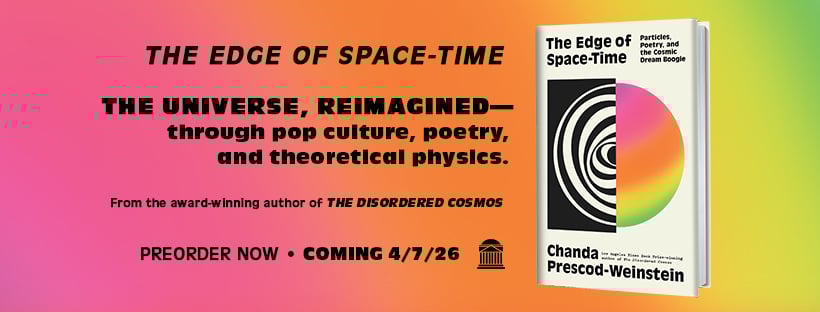
Before I get started, let me point you to my Exciting 2026 Book Releases list. Please take it to your local indie and shop shop shop! A lot of them are losing money right now, and this is one way to keep an important business in your community. Don’t forget also to preorder a signed copy of my new book The Edge of Space-Time.
After the 2024 election, I realized there were things I didn’t understand. I realized there were things a lot of my comrades who might identify as “left” or “progressive” didn’t understand. How did the Trump movement work? Why was this descent into deeper fascism happening?
There were elements I understood. I lived through the post-9/11 era, the bipartisan support for the PATRIOT Act, and the end of civil liberties as we understood them in the 1990s. I lived through the construction of all American Muslims and anyone who looked like they might be one as “potential terrorist.” I lived through “fighting terrorism” as an excuse for why we couldn’t have privacy — or reasonably sized shampoo bottles in our carry-on luggage.
Perhaps the most influential text for me in understanding the American political moment was Vaughn Rasberry’s Race and the Totalitarian Century: Geopolitics in the Black Literary Imagination. An academic book that is ostensibly about literature, really what I learned from this book was that Black artists in the 20th century United States were navigating a form of racial totalitarianism. White supremacy is a total system that functions in a fascist way in the lives of people of color in the U.S. If there is any book I would recommend reading to situate the actions of the Department of Homeland Security (which houses both ICE and CBP) in theoretical and historical context, it is Race and the Totalitarian Century: Geopolitics in the Black Literary Imagination.
The other book I already knew and was shaping my interpretation of events was Ruha Benjamin’s Race After Technology: Abolitionist Tools for the New Jim Code. This book was on the leading edge of a series of texts that have problematized the way Big Tech is introducing controlling black boxes into our daily lives, in ways that especially harm Black and other people of color. It’s impossible for me to read stories about Ring Camera networks being used by police or Flock networks without thinking about Race After Technology because Benjamin explains so clearly how these systems of control were already being put in place at the highest levels and used to criminalize Black people. For example, algorithms that are used to identify people and terrible at it? Yeah, she wrote about that. Nothing about the stories about ICE and CBP’s (bad) technology surprises me right now because I read this book.
But I knew there was a lot I didn’t understand. So I spent 2025 reading about topics that I always knew were important, but were never a priority for my reading lists: white Christian nationalism, the history of freedom of speech, and the evolution of Big Tech. What I learned from reading these books is that we are awash in even worse propaganda structures than I previously understood, that there were definitely people who did not fully understand what they were voting for, and as newspapers jettison queer and POC staff (or in some cases, most staff), the situation is only bound to get worse.
Don’t take my word for it. Do the reading yourself. Yes, reading still matters, even in the middle of a crisis. Yes, you can do these books as audiobooks (please use Libro.fm, not Audible!).
Here are the books I cannot recommend highly enough as essential to understanding how Donald Trump won and why his backers made sure he did:
Race and the Totalitarian Century: Geopolitics in the Black Literary Imagination by Vaughn Rasberry. See above.
Race After Technology: Abolitionist Tools for the New Jim Code by Ruha Benjamin. See above.
The Power Worshippers: Inside the Dangerous Rise of Religious Nationalism by Katherine Stewart. This book blew my mind. There was a lot of history I did not understand. Like, did you know that actually no one cared about abortion until racist Christians who were upset about integration decided to use it as a recruiting tool? I had no idea. I did not fully understand that white Christian nationalism had roots that went all the way back to the 18th century, nor did I appreciate that the current iteration exists in direct reaction to the integration of public schools. I also didn’t really understand how wildly effective they were at using new media. There are other books on this topic that have come out recently, but this was the one that really imprinted the most on my brain.
Careless People: A Cautionary Tale of Power, Greed, and Lost Idealism by Sarah Wynn Williams. This is the book about Facebook that scared Meta so bad that they sued to prevent its author from doing publicity. I’ll be honest and say that I thought I understood the negative impact Facebook was having on democracy. But I didn’t know that Facebook gave free staffers to the 2016 Trump campaign to help them target advertising to all of its American users. I didn’t know the Trump campaign had profiles on every single voter. I had no idea. I mostly listened to this book as an audiobook and Williams is an incredible narrator. Listen, if only for the batshit shark story.
What is Free Speech? The History of a Dangerous Idea by Fara Dabhoiwala. This is a book that I ignored in the bookstore, multiple times, even after reading the description. I was so certain that it was going to be “rah rah the first amendment” and not really get into race, and I was so wrong! Did you know that John Stuart Mill — the theorist of civil liberties worshipped by American liberals — was a career colonial administrator in India? That’s where he formed a lot of his ideas about freedom of speech, which situates in context how we should understand their application to speech about subjugated populations. When I asked two philosophers who work on philosophy and racism, neither of them knew this fact, which is discussed at length in Dabhoiwala’s text. This book, in conversation with the first two, really cemented my understanding of the forces at work on what information Americans have access to and the broader history of debates about what speech is, including when it counts as an action that can materially impact people’s lives. Dabhoiwala does not shy away from talking about race at all, repeatedly returning to how enslavement shaped the way American revolutionaries applied freedom and to whom.
More Everything Forever: AI Overlords, Space Empires, and Silicon Valley's Crusade to Control the Fate of Humanity by Adam Becker. If you’re wondering how the Christian nationalists and Big Tech people could possibly be working together, this book tells the story from the perspective of a deep dive into how Silicon Valley is enacting a takeover of all human life. The thing you need to know is that these people are wildly powerful, extremely well-resourced, and deeply unhinged. Becker is an excellent guide through the scientific and technological concepts you need to understand.
Money, Lies, and God: Inside the Movement to Destroy American Democracy by Katherine Stewart. Yes, this is another book by Katherine Stewart. While it covers some of the same terrain as The Power Worshippers, what this book seeks to do is synthesize how is it that we have a movement of secular Big Tech people, billionaires, and Christian Nationalists all working together, even when they sometimes have different ideological commitments. It is useful to have it all in one place, from the perspective of a scholar who has spent many years studying, interviewing, and moving among white Christian nationalists.
Let the Poets Govern: A Declaration of Freedom by Camonghne Felix. When Felix was in her late 20s, she was a speech writer for presidential candidate Elizabeth Warren and on the National Book Award for poetry longlist at the same time. A poet in the Black radical tradition who has seen the ugly innards of “pragmatic” progressive Washington, this book is a critical analysis of how words shape our world, are used to manipulate us, and can be used to free us. It is an argument for poetry, and it is an argument for something better than the shit the Democrats regularly serve up. This book actually won’t come out for a few more weeks, but you should preorder it — and plan to attend my conversation with Camonghne on April 6 about my book The Edge of Space-Time at an event jointly hosted by Loyalty Books and Lost City Books in Washington, D.C. (more details to come, but preorder a signed copy from Loyalty now!) There is a surprising amount of overlap between my book and Camonghne’s and not just because we are both queer Black Jewish millennials! We also think through some of the same Aimé Césaire essays because we know in this moment poetry and symbolism and our ability to interpret them are key.
Before I go, I want to point folks to some essential reading about Bad Bunny from Vanessa Díaz and Petra Rivera-Rideau. Their new book P FKN R: How Bad Bunny Became the Global Voice of Puerto Rican Resistance is a must read about a culturally dominant figure who put on a beautiful Super Bowl Half-Time Show last night. You can also read their piece in Rolling Stone today about all the symbolism in the show that you might have missed.
Don’t forget to support local mutual aid efforts, and if you’re not sure where to get started, there’s a decent chance your local indie bookstore is participating and can give you information. Don’t forget to throw a bit of business their way too, if you can. Here are some books you might preorder from them, a gift for your future self.
In 2026, our willingness to read more than 240 characters at a time matters. Make it count.