The Spectrum of Allies is Better than Pessimistic Binaries
A theory and tool that can help you rethink the work ahead
My new book, The Edge of Space-Time: Particles, Poetry, and the Cosmic Dream Boogie, is a finalist for the New England Book Award! And available in North America, UK, and Europe wherever you get your books. I encourage you to shop your local indie, use Bookshop for ebooks, and Libro for audiobooks. There are signed copies of the hardcover at Water Street Books.
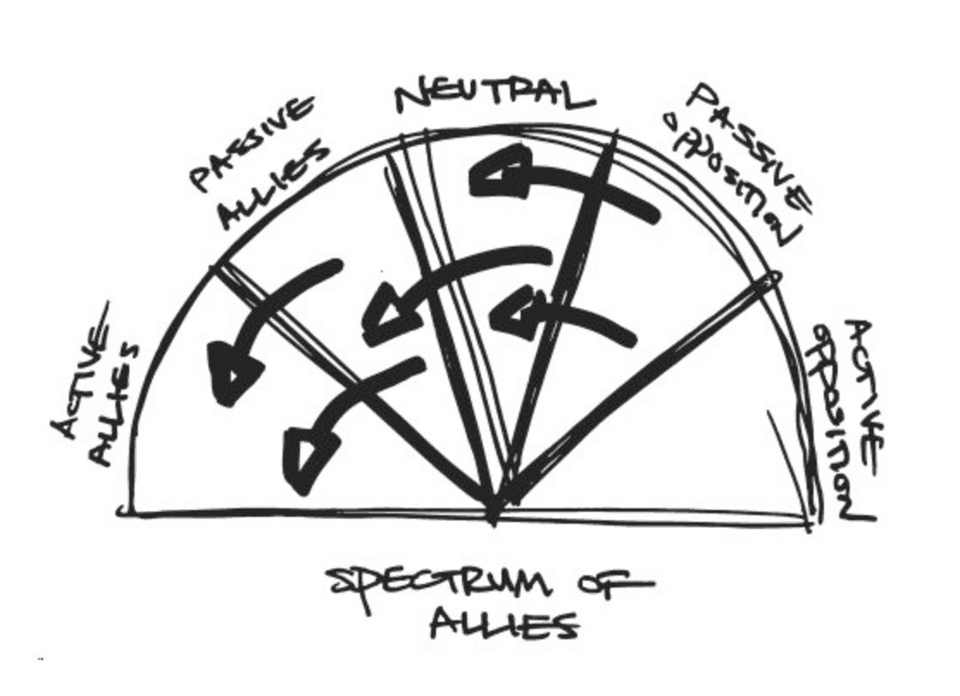
One of the tactics that fascism revels in is depressing people. And I mean that in the clinical sense. They want anyone who opposes them to be deeply depressed and pessimistic. When you’re pessimistic, you spread pessimism, and when you spread pessimism, building and sustaining opposition movements becomes that much harder. One of the ways that we can end up depressed is thinking in binaries — that everyone is split between either completely against us or totally with us. The problem with this point of view is that not only is it pessimistic and depressing, but it’s not backed by the data we have about current political views. So, how should we instead understand and articulate the challenges we face in making change?
The Spectrum of Allies, pictured in the drawing above by Josh Kahn, is an enormously useful concept developed by George Lakey and Martin Oppenheimer. The basic concept is that when you’re doing your organizing assessment — figuring out what the problem is and how you’re going to address it — you should sort people into categories, on a spectrum of support to opposition. As drawn by Josh Kahn, these categories are: active opposition, passive opposition, neutral, passive allies, and active allies. Then you try to move people away from active opposition, toward active allies.
The theory behind this, articulated by Nadine Bloch, is that “Movements seldom win by overpowering the opposition; they win by shifting support out from under it.” In other words, your goal isn’t 100% conversion of the active opposition crowd into active allies. But it may be that you decide what’s most effective for your campaign is focusing on moving the active opposition people into the passive opposition category. Or maybe you want to focus on moving passive allies into active allies. Or maybe your group has enough resources to try and do both, with different teams focusing on different elements.
Or maybe you’re not actually trying to change people’s minds at all, but the Spectrum of Allies can be a really useful exercise in trying to understand the challenges and opportunities ahead, given what resources are available to you.
Even if you’re not going to actively use the Spectrum of Allies, I think it is a hugely useful theoretical framework. The Spectrum of Allies helps us remember that even our opposition aren’t always on the same page about how invested they are in their opposition to us.
Looking at the Spectrum of Allies and spending time reading about right wing movements, it’s pretty clear that conservative politics has used this theory for a very long time. It helped them turn abortion into an issue when it wasn’t an issue at all, and it helped them use abortion as a Trojan horse for all sorts of things. It’s also clearly been at work in their efforts to reduce public support for LGBTQ+ rights, and their anti-trans playbook mirrors the Satanic Panic in some pretty disturbing ways. They make it sound like it’s about girls safety in bathrooms and sports, which is a great way to move under-informed passive allies into neutral, passive opposition, and active opposition.
So, the right understands how to put this theory into action. We should too.
The Center for Nonviolence has some helpful suggestions about how to deal with people who fall in the different categories:
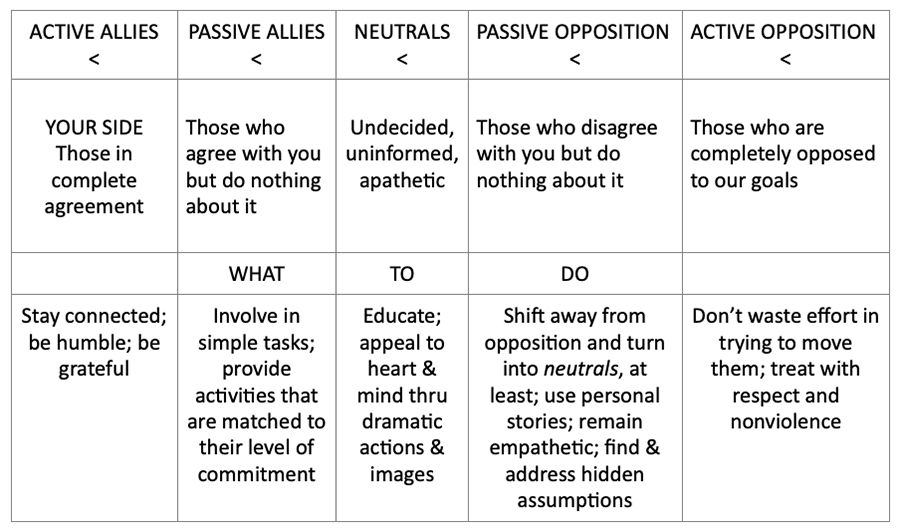
These aren’t hard and fast rules, rather they are suggestions that can help you think about what you believe and want to do. Personally, I think education is probably necessary not just for neutrals but also active and passive allies. We should always be in a learning phase, even when we feel like we know a lot.
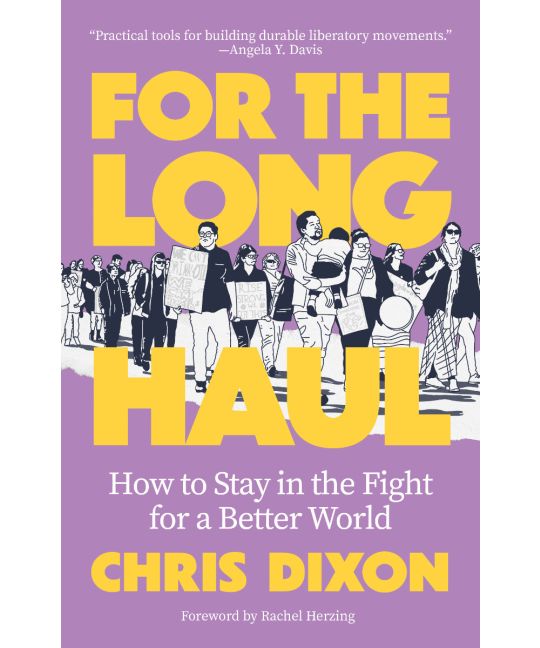
One reading suggestion: pick up a copy of the new Chris Dixon book For the Long Haul: How to Stay in the Fight for a Better World. I’ve known Chris for almost 25 years now, and he’s one of the thinkers I pay closest attention to when it comes to theorizing change and movement building. Here’s the blurb I gave the book:
“I cannot imagine a more timely text than Chris Dixon’s For the Long Haul: How to Stay in the Fight for a Better World. Dixon’s warm prose is a salve for weary spirits. So many of us are afraid that there’s no point to the work we do or struggling to stay in the work. Dixon rejects moralizing in favor of thinking through how to make long-term struggle sustainable. A must-read for young folks and elders alike, I hope communities will read it together to find hope, sustenance, and the groundwork for a future where we survive and thrive.” —Chanda Prescod-Weinstein, author of The Disordered Cosmos: A Journey into Dark Matter, Spacetime, and Dreams Deferred
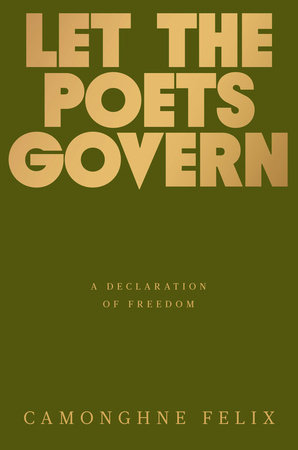
Another reading suggestion is Camonghne Felix’s Let The Poets Govern: A Declaration of Freedom, which was longlisted yesterday for the National Book Award in nonfiction. This is a powerful and unique analysis of how rhetoric and poetics shape our politics and our movements, from the point of view of a Black Caribbean American Anti-Zionist Jewish poet. I don’t think anyone is better qualified to have written this book for this moment than Camonghne, who I’ve known for a decade and admire enormously both as a poet and political theorist. I watched as Camonghne worked on this book and she put her foot in it. Read it.